Basement mold removal is urgent — basements combine limited airflow, consistent humidity, and often a history of past flooding or seepage, making them one of the fastest-spreading mold environments in a home. Our certified team removes basement mold safely, treats affected surfaces and framing, and identifies what’s actually driving the moisture so you know exactly what it will take to keep it from coming back.
Finding mold in your basement is unsettling, whether it’s a finished living space or storage for things you care about. You’re wondering how long it’s been growing, what it means for your foundation and belongings, and what it will take to fix. We inspect thoroughly and tell you exactly what we find.
Our first priority is removing the mold safely and treating the drywall, framing, or belongings it’s affected. If the real issue is ongoing moisture — foundation seepage, humidity, or drainage — we’ll identify that clearly so you understand the cause, even though a structural fix may need a foundation or waterproofing specialist.
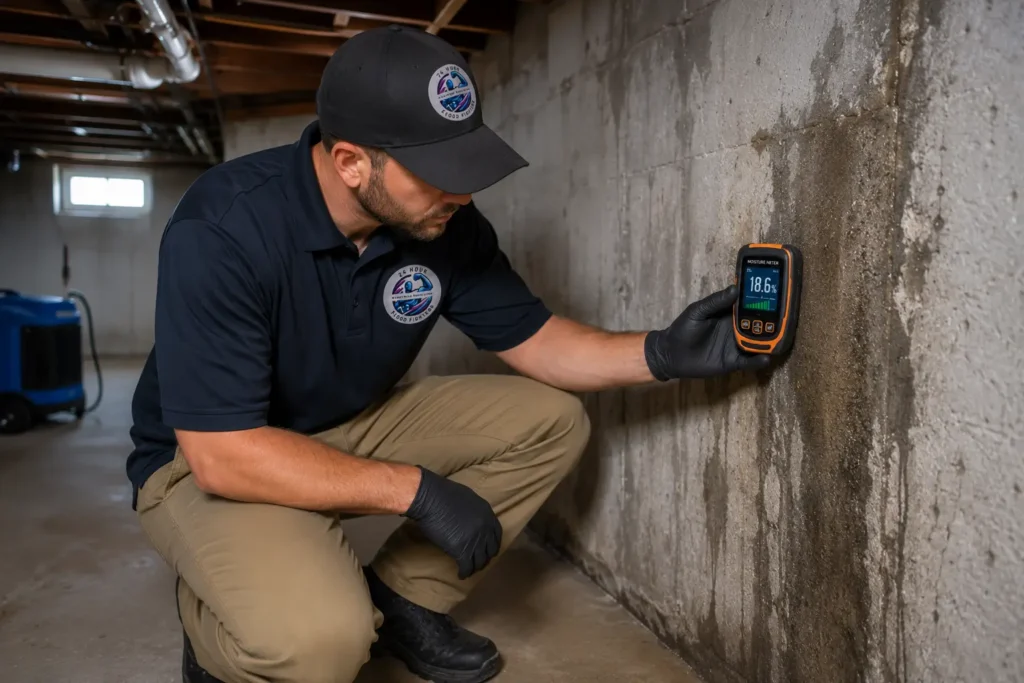
We assess humidity and moisture levels throughout the basement to find every affected zone, not just visible mold.
We identify whether foundation seepage, condensation, or past flooding is feeding the mold, so you understand the real cause.
Basement mold severity varies widely. Some cases are limited to surface growth on drywall or storage items; others have spread into framing or subfloor materials. We assess which applies to your basement before recommending a plan.
For mold isolated to drywall or finished surfaces, we remove and treat affected materials, then verify air quality before closing the job out.
For mold that's penetrated wall studs or subfloor, we treat the structural wood with antimicrobial solutions to stop further spread.
Every job includes identifying what's driving the moisture. If a structural fix like waterproofing or a sump pump is needed, we'll tell you and can refer you to a trusted local partner.
Musty odors, visible discoloration on walls or stored items, increased allergy symptoms, and unusually high basement humidity are common signs of basement mold, especially in spaces with a history of flooding or seepage.
No — we specialize in mold removal, structural material treatment, and moisture diagnosis. If your basement needs a structural fix like waterproofing or a sump pump, we'll identify that during inspection and can refer you to a trusted local partner.
It depends on how long it was wet and how far the mold has spread. Porous materials like drywall and carpet padding often need replacement, while non-porous surfaces can typically be cleaned and treated.
Costs depend on the square footage affected, whether the basement is finished, and whether structural framing treatment is needed. We provide a free on-site inspection and written estimate before any work begin
Often, yes, if the mold resulted from a covered peril like a sudden pipe burst or storm-related flooding. Mold from long-term humidity or neglect is typically not covered. We can help document the cause for your claim.
Targeted mold removal is often completed in a single day. Larger jobs involving structural framing treatment or extensive drywall removal typically take 1–3 days.
Mold can begin colonizing within 24 to 48 hours of water exposure, so any flooding not fully dried within that window puts you at real risk, even if the flooding seems minor.
We identify the moisture source behind the mold during every inspection. Removing mold without understanding the cause means it can return, so we're always upfront about what's driving it, even if the long-term fix falls outside our scope.
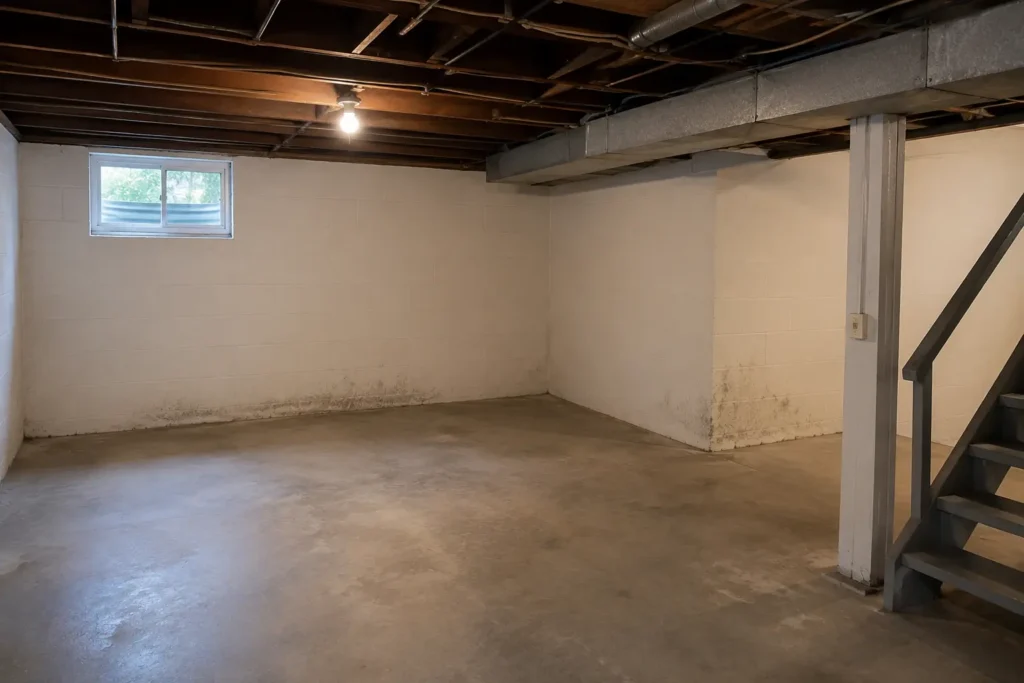
After any water intrusion in your basement — a plumbing leak, foundation seepage, or a full basement flood — mold can begin colonizing exposed materials within 24 to 48 hours. Left untreated, it spreads across drywall and framing, often going unnoticed in storage areas or behind furniture until the smell reaches the rest of the house.
Our mold remediation team responds quickly to assess moisture levels, contain the affected area, and begin treatment, often on the same visit as your inspection. If your basement mold started with flooding, our water damage restoration team can also address that damage directly in the same visit. For mold beneath the home in ventilated spaces, see our crawl space mold removal services.
We provide professional water extraction services throughout Middle Tennessee, including Nashville, Murfreesboro, and surrounding communities.
The longer mold sits in your basement, the more it affects the air quality throughout your home and the more it can damage stored belongings and structural materials. Call now for a free inspection, and we’ll tell you exactly what your basement needs.
Fast Response • Certified Mold Remediation • Insurance Assistance • Serving Middle Tennessee
Basement mold is easy to underestimate because these spaces are often used for storage rather than daily living. Left untreated, it spreads across drywall and framing, compromises stored belongings, and can affect indoor air quality throughout the home as air circulates upward. According to the EPA, mold exposure can trigger allergic reactions and respiratory issues in sensitive individuals, which is why proper containment matters as much as removal itself.
24 Hour Flood Fighters uses IICRC S520 protocols to assess the full extent of basement mold before treatment begins, ensuring nothing is missed behind stored items or in hard-to-reach corners.
Basements combine limited airflow, consistent humidity, and often a history of past seepage or flooding, conditions mold needs to thrive. Once moisture is present, mold can begin colonizing exposed materials within 24 to 48 hours. Because basements are often used for storage rather than daily living, this growth frequently goes unnoticed until it's well established, especially behind furniture or stacked boxes
Not all basement mold is the same. Surface mold on drywall or storage items can typically be removed and treated without major structural concern. However, prolonged moisture exposure can affect wall framing or subfloor materials, requiring more extensive structural treatment. Our inspection process distinguishes between the two, so you understand exactly what your basement needs before any work begins.
Removing existing mold solves today's problem, but it doesn't address what caused it. That's why every inspection includes identifying whether foundation seepage, condensation, or past flooding is driving the moisture. We're upfront about the scope of what we do: mold removal and structural material treatment. If your basement needs a structural fix like waterproofing or a sump pump, we'll tell you clearly and can point you to a trusted local partner for that work