Crawl space mold removal shouldn’t wait — every week it’s ignored means a bigger problem for your structure and your air quality. Our certified specialists locate the moisture source, safely remove existing mold growth, and treat the wood to stop it from spreading. We’ll also tell you honestly what’s driving the moisture, so you know exactly what it will take to keep it from coming back
Discovering mold in your crawl space is unsettling — even when you can’t see it from your living room. You’re worried about what it means for your family’s health, your home’s structural wood, and what it will take to fix. We treat every inspection with the same care we’d want for our own homes, and we tell you honestly what we find.
Our first priority is always to remove the mold safely and treat the wood it grew on. If the real issue is ongoing moisture — a slow leak, poor ventilation, or grading problem — we’ll tell you exactly what’s driving it and what your options are before we ever start work.
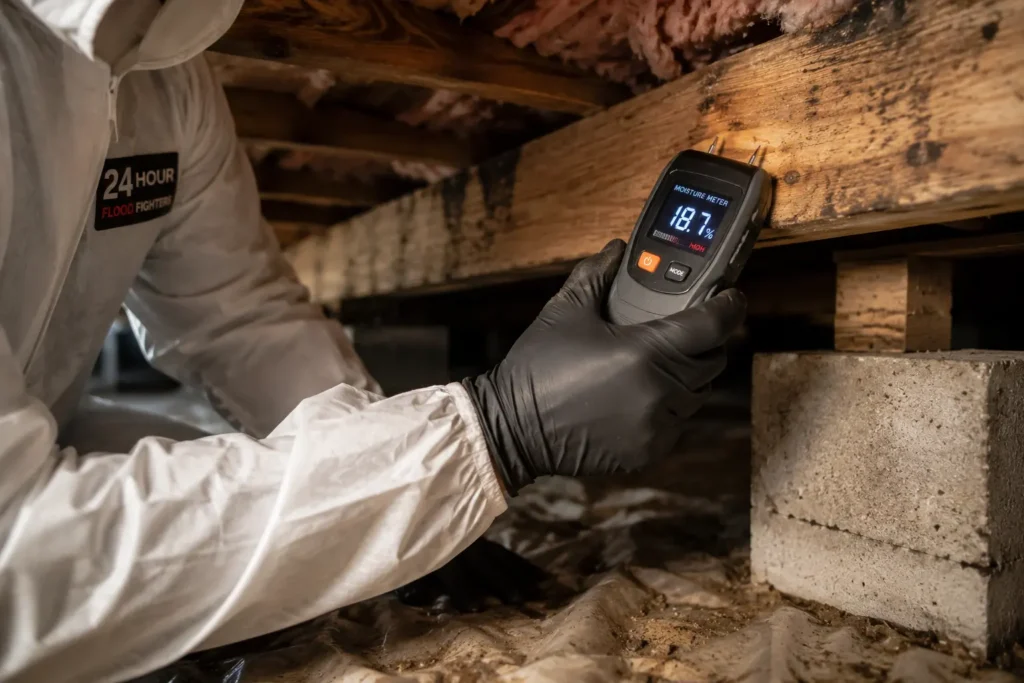
We use humidity meters and moisture sensors to find every damp zone beneath your home, not just the mold you can see.
We identify what's actually feeding the moisture, whether it's a plumbing leak, poor ventilation, or drainage issue, so you understand the real cause, not just the surface problem.
Not every crawl space needs the same level of work. We assess how far the mold has spread, whether it’s limited to the surface or has affected the wood itself, before recommending a plan, so you’re never paying for more than you need.
For isolated mold growth with no major moisture source, we remove and treat the affected surfaces, then verify air quality before closing the job out.
For mold that's penetrated floor joists or subfloor, we treat the wood itself with antimicrobial solutions to stop it from spreading further into the structure.
Every job includes identifying what's driving the moisture behind the mold. If a structural fix like a vapor barrier is needed, we'll tell you and can refer you to a trusted local partner for that work.
Musty odors on the main floor, increased allergy symptoms indoors, visible discoloration on floor joists, and unusually high indoor humidity are common signs. Since most crawl spaces are rarely inspected, many homeowners notice the smell upstairs before they ever see the mold itself.
No — we specialize in mold removal, treatment, and moisture diagnosis. If your crawl space needs a structural fix like a vapor barrier or full encapsulation, we’ll identify that during inspection and can refer you to a trusted local partner for that work.
Yes. Crawl space air is pulled up into your living space through the “stack effect,” meaning spores and musty odors circulate throughout your home even if you never enter the crawl space yourself.
Costs depend on the size of the crawl space, the extent of mold growth, and whether structural wood treatment is needed. We provide a free on-site inspection and written estimate before any work begins.
Often, yes, if the mold resulted from a covered peril like a plumbing leak. Mold from long-term humidity or neglect is typically not covered. We can help document the cause and work directly with your insurance provider.
A dehumidifier can help manage airborne humidity, but it won’t stop ground moisture entering through soil or an existing leak. We’ll help you understand what’s actually driving your moisture problem so you can decide on the right long-term fix.
We specialize strictly in the emergency mitigation, clean dust-controlled demolition, and deep structural drying/sanitization of your subfloor. Our job is to completely resolve the water emergency and leave your space 100% dry, safe, and perfectly prepped. While we don’t lay the new floors ourselves, we work closely with a trusted network of premium flooring installers and contractors that we can immediately refer you to so your rebuild happens seamlessly.
Recurring mold almost always means the underlying moisture source was never fixed, whether that’s a missing vapor barrier, poor ventilation, or an ongoing plumbing leak. We identify that source during inspection so treatment actually holds.
Not sure what to look for in a mold remediation company? Check out our 10 essential questions to ask your mold removal service before hiring.
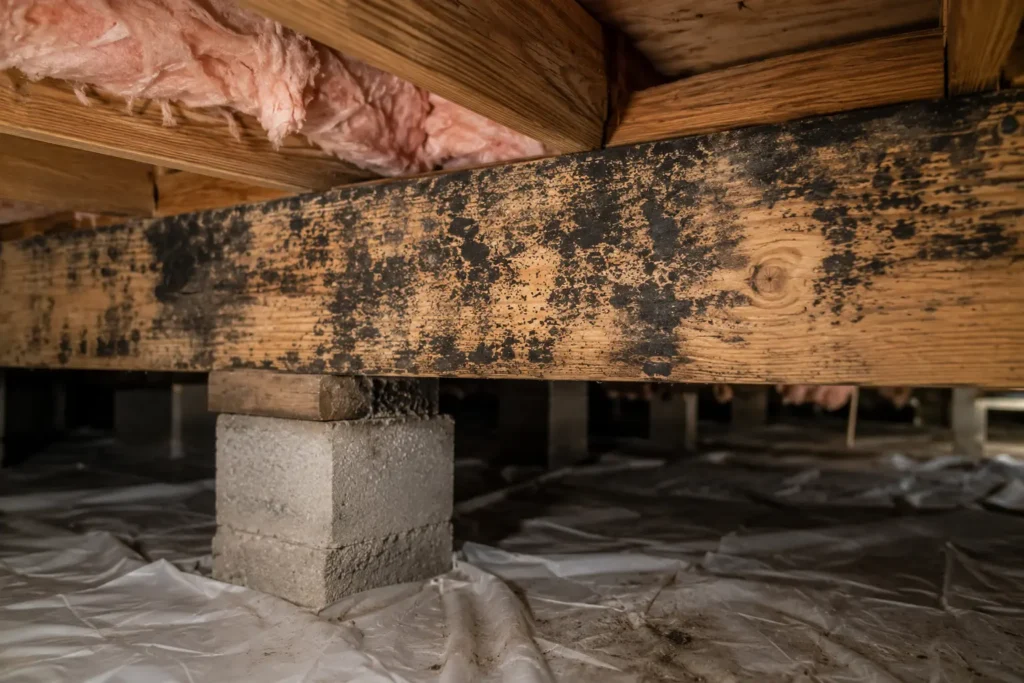
After any water intrusion beneath your home — a plumbing leak, crawl space flooding, or simple humidity buildup — mold can begin colonizing exposed wood within 24 to 48 hours. Left untreated, it spreads along floor joists and into insulation, eventually affecting air quality throughout the house through the stack effect.
If your mold problem is above-grade rather than beneath the home, see our basement mold removal services.
Our mold remediation team responds quickly to assess moisture levels, contain the affected area, and begin treatment, often on the same visit as your inspection. For a deeper look at how we handle different mold types, including toxic black mold, see our mold remediation and black mold removal guide.
We provide professional water extraction services throughout Middle Tennessee, including Nashville, Murfreesboro, and surrounding communities.
The longer mold sits beneath your home, the more it costs to fix, and the more it affects the air you breathe upstairs. Don’t wait for a musty smell to turn into a bigger problem. Call now for a free inspection, and we’ll tell you exactly what your crawl space needs.
Fast Response • Certified Mold Remediation • Insurance Assistance • Serving Middle Tennessee
When mold takes hold beneath a home, the urgency is easy to underestimate simply because it's out of sight. Professional remediation matters because crawl space mold rarely stays contained. It spreads along floor joists, compromises structural wood over time, and circulates into the living space above through normal airflow. 24 Hour Flood Fighters uses moisture mapping and IICRC S520 protocols to identify the full extent of contamination before treatment begins, ensuring nothing is missed behind insulation or in hard-to-reach corners of the crawl space.
Crawl spaces are especially vulnerable to mold because they combine three conditions mold needs: organic material (wood), limited airflow, and a consistent moisture source from the ground below. Once humidity or standing water is present, mold can begin colonizing exposed wood within 24 to 48 hours. Because most homeowners rarely inspect their crawl space, this growth often goes unnoticed until it's well established. Acting on early signs, like a musty smell upstairs, gives our team the best chance to treat the problem before it spreads further.
Not all crawl space mold is the same. Surface mold on joists and subfloor can typically be removed and treated without major structural concerns. However, prolonged moisture exposure can lead to wood rot, where the structural integrity of floor joists and support beams is compromised, not just the surface. Our inspection process distinguishes between the two, since wood rot may require structural repair in addition to mold remediation. We document our findings clearly so you understand exactly what your crawl space needs before any work begins.
Removing existing mold solves today's problem, but it doesn't address what caused it. That's why every 24 Hour Flood Fighters inspection includes identifying the specific moisture source behind the growth, whether it's a plumbing leak, poor ventilation, or drainage issue around your foundation. We're upfront about the scope of what we do: mold removal, structural wood treatment, and moisture diagnosis. If your crawl space needs a structural fix like a vapor barrier or full encapsulation, we'll tell you clearly and can point you to a trusted local partner for that work, so you're never left guessing what's next.