Restaurant Water Damage & Mold Restoration Services: Comprehensive Emergency Solutions for Food Service Recovery
Restaurants facing water intrusion and mold risk confront serious threats. These include dangers to health, reputation, and revenue. Fast, specialized help is crucial.
This article covers several key areas. We explain the root causes of restaurant water damage. We show how emergency water extraction and structural drying protect kitchens and dining areas. You’ll learn best practices for mold remediation and prevention. We also discuss regulatory and insurance considerations. Finally, we highlight why certified restoration professionals are vital for food service recovery.
Restaurants have unique risks. Wet refrigeration units, grease-trap overflows, and HVAC condensation can quickly lead to contamination and mold growth. Owners need specific strategies. These must prioritize food safety and allow for rapid reopening.
After this first section, a brief note on availability: Restoration specialists are ready to help. They offer 24/7 emergency response and specialize in food service. They can assist restaurants needing immediate mitigation and support with insurance documentation. The article then delves into cause analysis, emergency protocols (including extraction and drying), mold remediation workflows, health code and claims guidance, certification benefits, and preventative maintenance recommendations for long-term resilience.
What Causes Water Damage in Restaurants and How Does It Impact Your Business?
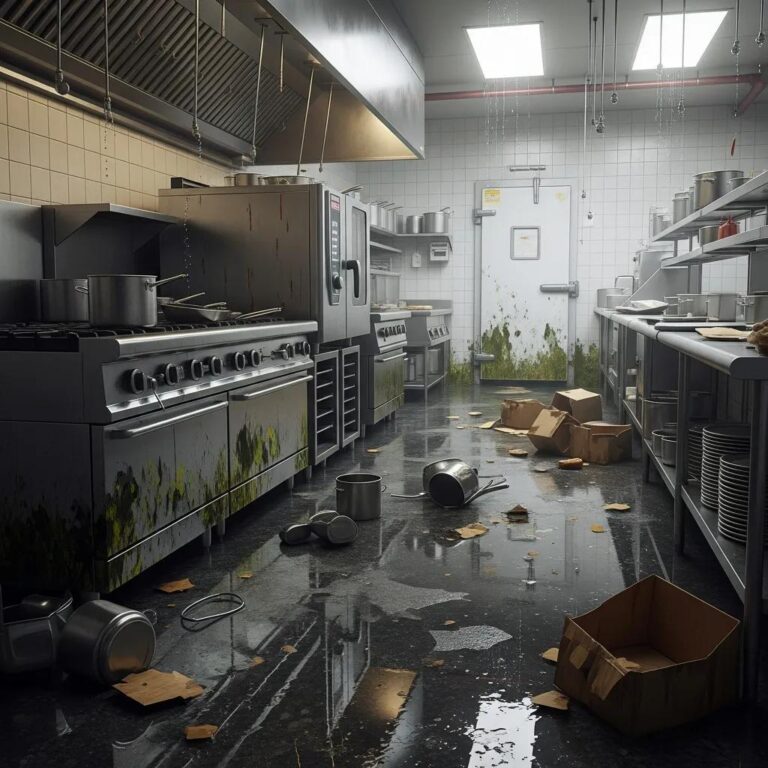
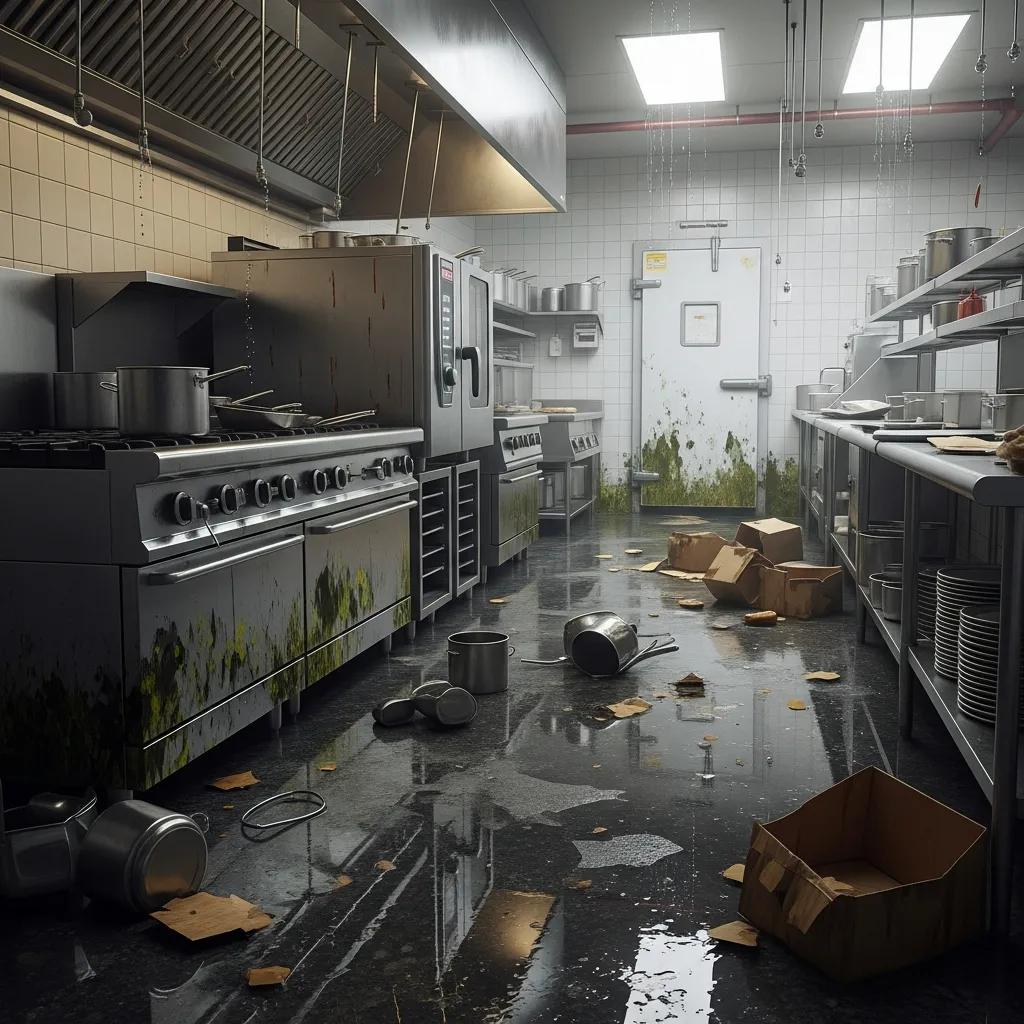
Water damage in restaurants means any unplanned water entry. This affects kitchens, storage, or dining areas. It compromises food safety and the building’s structure. Mechanical failures, appliance leaks, plumbing issues, roof problems, and sewage backups can all introduce water. This water can be clean, gray, or black, each with different contamination risks and cleanup needs. Water quickly soaks into porous materials. This speeds up secondary damage and mold growth. It creates contamination hazards that quickly raise concerns for health departments and customers. Understanding these causes helps operators act fast. This reduces downtime and long-term repair costs, while keeping service safe.
Common causes of restaurant water damage include:
- Equipment failure: This covers issues with appliances and other machinery.
- Plumbing incidents: Problems with pipes and drains.
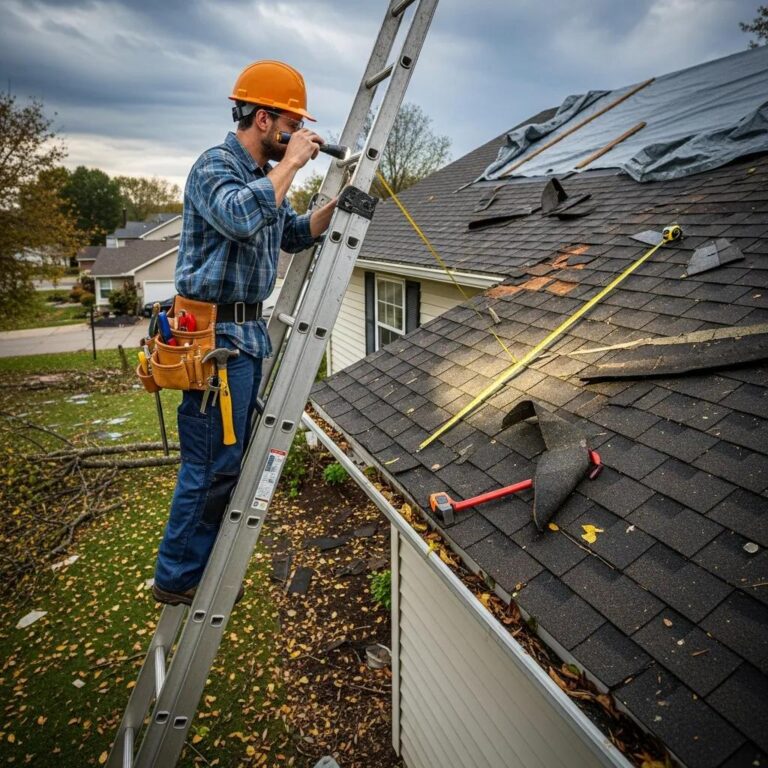
- Roof and drainage problems: Issues allowing water in from above.
- Sewage backups: A serious contamination risk.
Here are some specific examples: water damage restoration
- Burst or leaking pipes: Failures in supply or drain lines can flood kitchens and storage areas. These need immediate isolation.
- Appliance and equipment leaks: Ice machines, dishwashers, and refrigeration condensate lines often cause slow leaks. These can pool unnoticed under equipment.
- Sewage backups and grease trap overflows: Contaminated wastewater brings biological hazards. These require different cleanup protocols than clean water.
These causes directly impact your business. You might face contaminated inventory or forced closures for sanitization. You could lose revenue during repairs. There’s also the potential for public-health citations. Knowing these patterns helps restaurants plan for prevention and quick responses. This limits financial and reputational harm.
Common Causes of Restaurant Water Damage: Burst Pipes, Equipment Leaks, and Sewage Backups
Burst pipes and plumbing failures are common in commercial kitchens. They often result from high usage, blocked drains, and old fittings. This can cause sudden floods that spread through service corridors and storage rooms.
Equipment leaks are usually slower. These come from ice machines, dishwashers, and refrigeration units. They are equally damaging because they happen under cabinets and equipment. Often, they go unnoticed until significant water saturation occurs.
Grease trap failures or sewage backups introduce contaminated black water. This requires immediate containment. Specialized personal protective equipment is needed. Different disposal methods are also necessary to meet health standards.
Owners should shut off isolated valves. Remove perishable items from affected areas. Then, call for a professional assessment. This will determine the contamination level and next steps. Quick containment reduces the scope and cost for restoration teams.
Financial and Health Risks of Water Damage in Food Service Establishments
Water intrusion in a restaurant can lead to direct repair costs. These include expenses for floors, cabinets, and refrigeration systems. There are also indirect costs. These come from lost service days, spoiled inventory, and health-inspection actions. Mold can start growing within 24–48 hours in humid food-service environments. It creates allergens, mycotoxins, and bacteria. These threaten staff and customers if not properly removed. Beyond immediate health risks, visible water damage or mold can trigger health department investigations. This may lead to temporary closures. Such events damage your reputation and recurring revenue. Calculating potential losses helps. Understanding typical remediation costs also helps. These costs depend on contamination level, affected square footage, and whether you replace or restore items. This knowledge helps operators prioritize prevention. It also helps maintain insurance-ready documentation for claims.
How Does Emergency Water Extraction & Flood Cleanup Protect Your Restaurant?
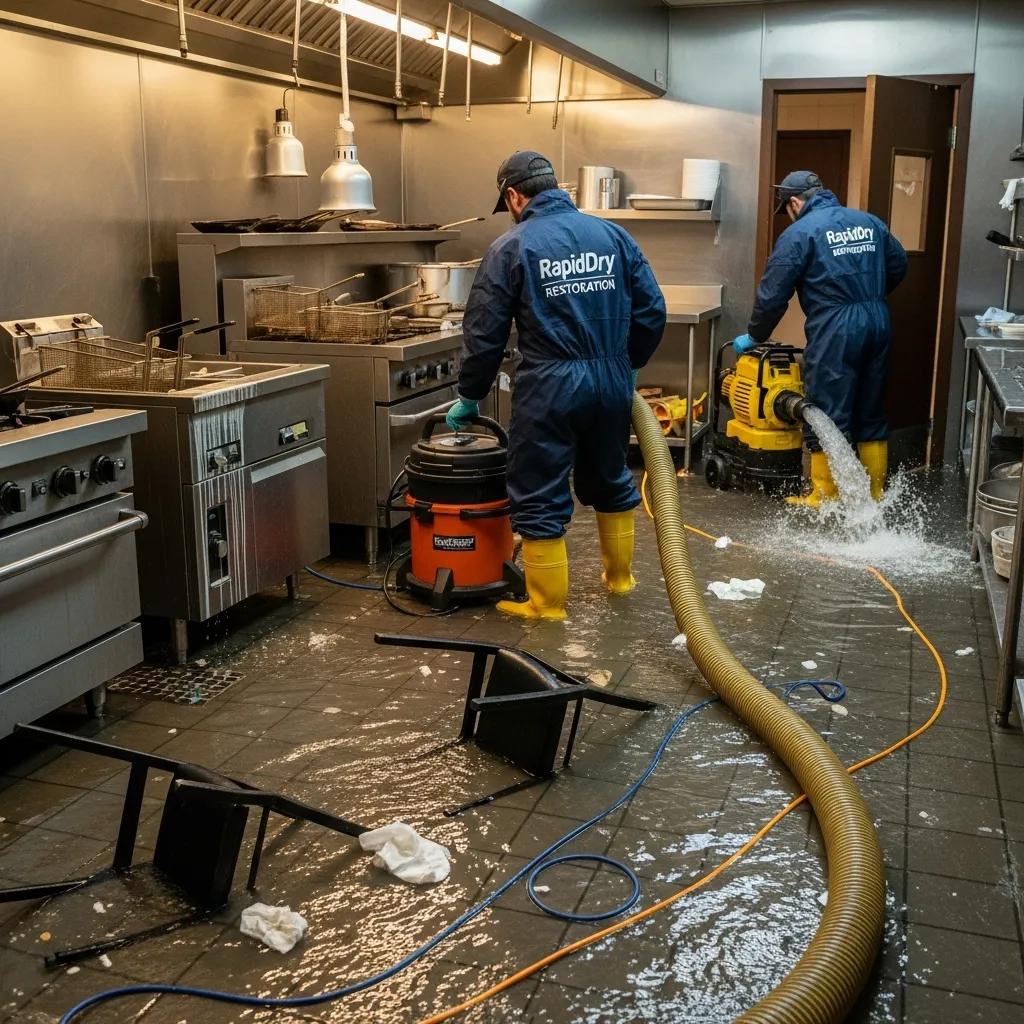
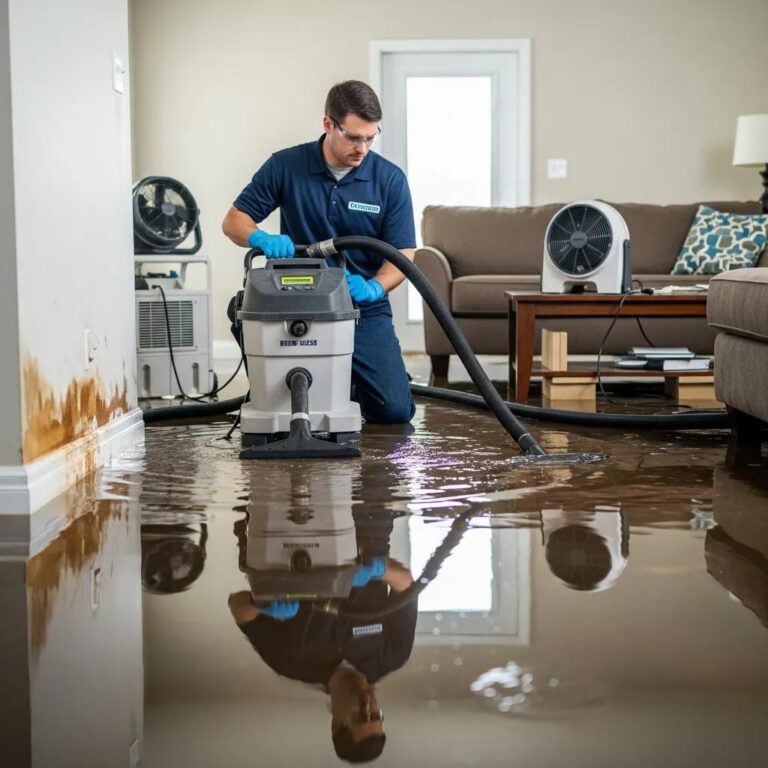
Emergency water extraction and flood cleanup are organized responses. They quickly remove standing water. They stabilize the environment. This reduces the chance of microbial growth and structural damage. The process starts with a fast assessment. This classifies the water type and identifies affected areas. Then comes prioritized extraction, drying, sanitization, and continuous moisture monitoring. This verifies the restoration. Fast mobilization of pumps, commercial-grade vacuums, air movers, and dehumidifiers reduces drying time. It also lessens secondary damage to floors, walls, and equipment. Quick action protects food safety. It shortens downtime. It also lowers overall restoration costs by stopping further damage and preventing mold.
Here are the immediate actions and benefits of emergency response:
- Rapid Water Extraction: This usually happens within 1–4 hours. It removes standing water, preventing damage to your building and inventory.
- Structural Drying & Dehumidification: This takes 24–72 hours. It lowers moisture levels to stop mold growth and material breakdown.
- Sanitization & Odor Control: Done after the drying phase. This step makes sure your restaurant is clean and safe for food service and staff.
This list shows how early extraction and drying reduce secondary damage. It also highlights why costly reconstruction might be avoided. It clarifies why operators should prioritize professional mitigation steps. These steps focus on both speed and verified results.
24/7 Commercial Water Extraction Services for Rapid Flood Cleanup
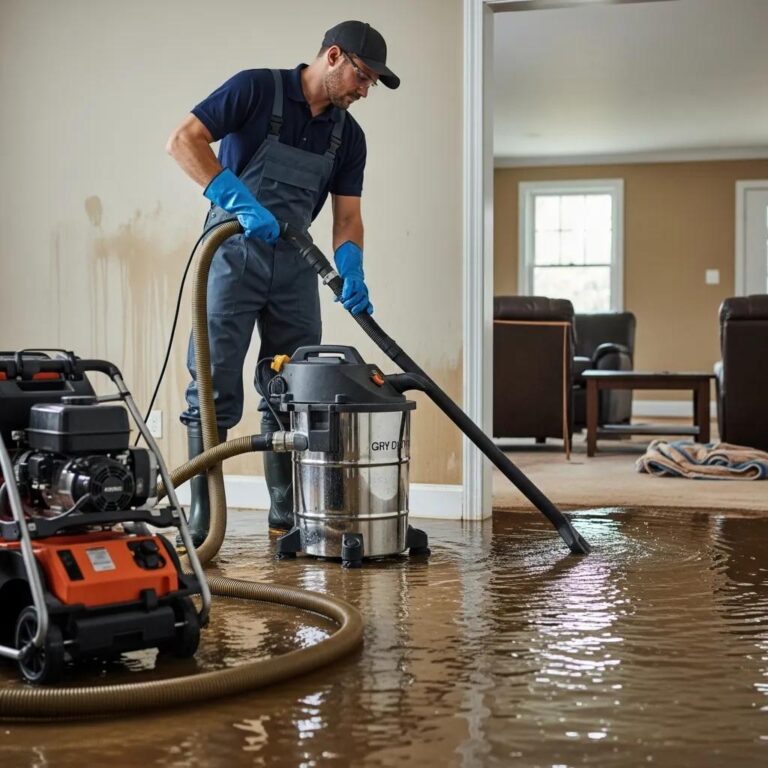
Commercial water extraction in restaurants uses industrial pumps, truck-mounted vacuums, and portable extractors. These remove large volumes of standing water quickly. This minimizes damage to floors, skirting, and equipment foundations. Crews trained for food-service environments work with managers. They isolate utilities and protect refrigerated inventory. They also set up contamination zones. This keeps sanitized areas separate from affected spaces. The speed of response, often within hours, directly impacts drying time and cleanup scope. Documented service reports support insurance and health-inspector communications. Understanding crew roles and extraction planning helps kitchen managers make critical decisions. These include temporary closure or targeted area reopening while cleanup continues.
Advanced Structural Drying and Dehumidification Techniques for Restaurants
Structural drying uses directed air movement and dehumidification. This draws moisture out of building materials. It avoids hot, dry environments that could damage finishes or equipment. This balances quick results with material safety.
Industrial dehumidifiers reduce humidity. They bring it below levels that support microbial growth. Air movers speed up evaporation at specific drying points. These include subfloors and wall cavities.
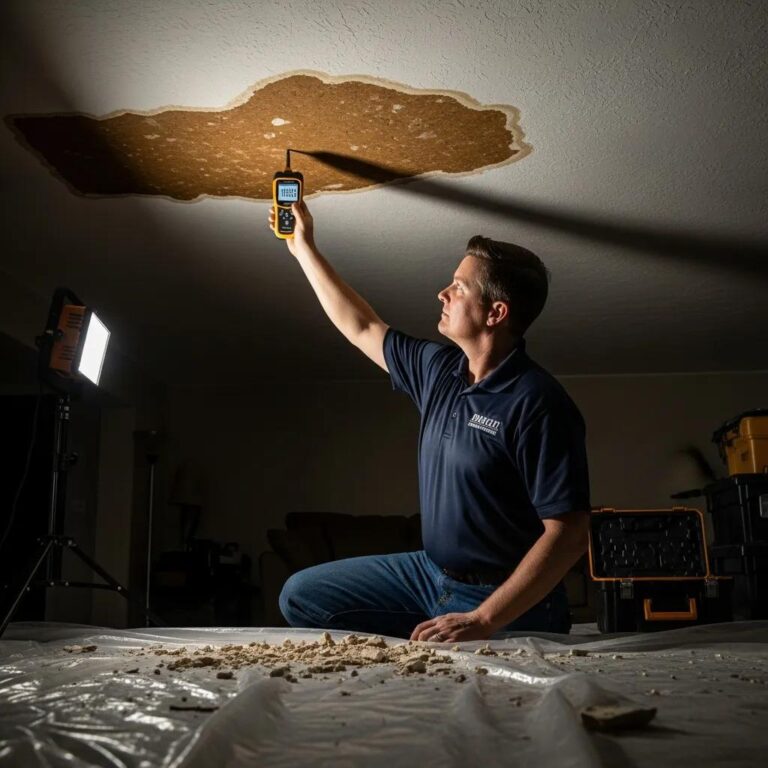
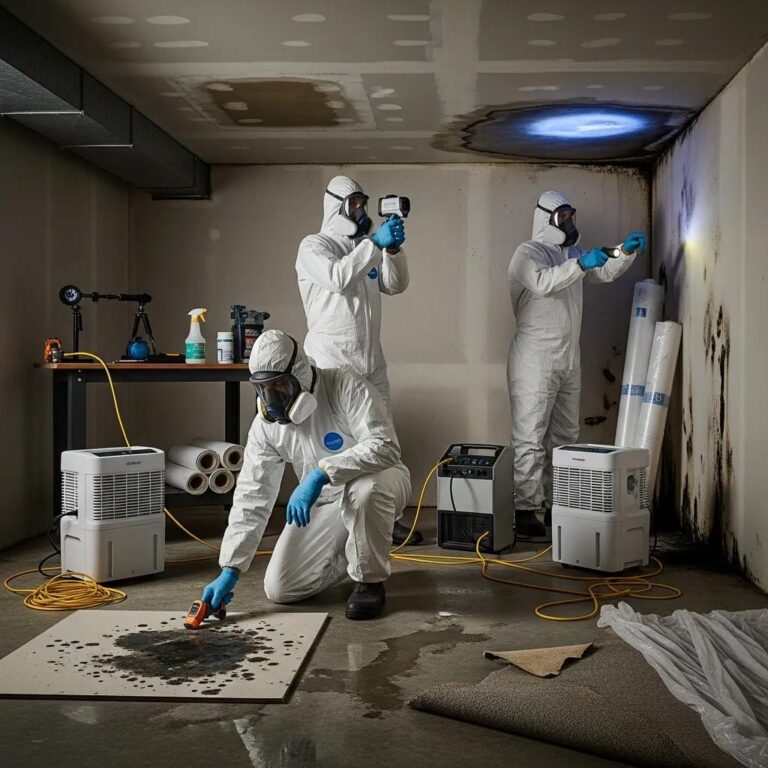
Moisture meters and thermal imaging cameras provide objective monitoring. They verify that drying targets are met. This happens before sanitation and repairs begin. Verified drying and documented clearance readings are essential for safe reopening. They also help substantiate insurance claims and regulatory compliance.
What Are the Best Practices for Restaurant Mold Remediation and Prevention?
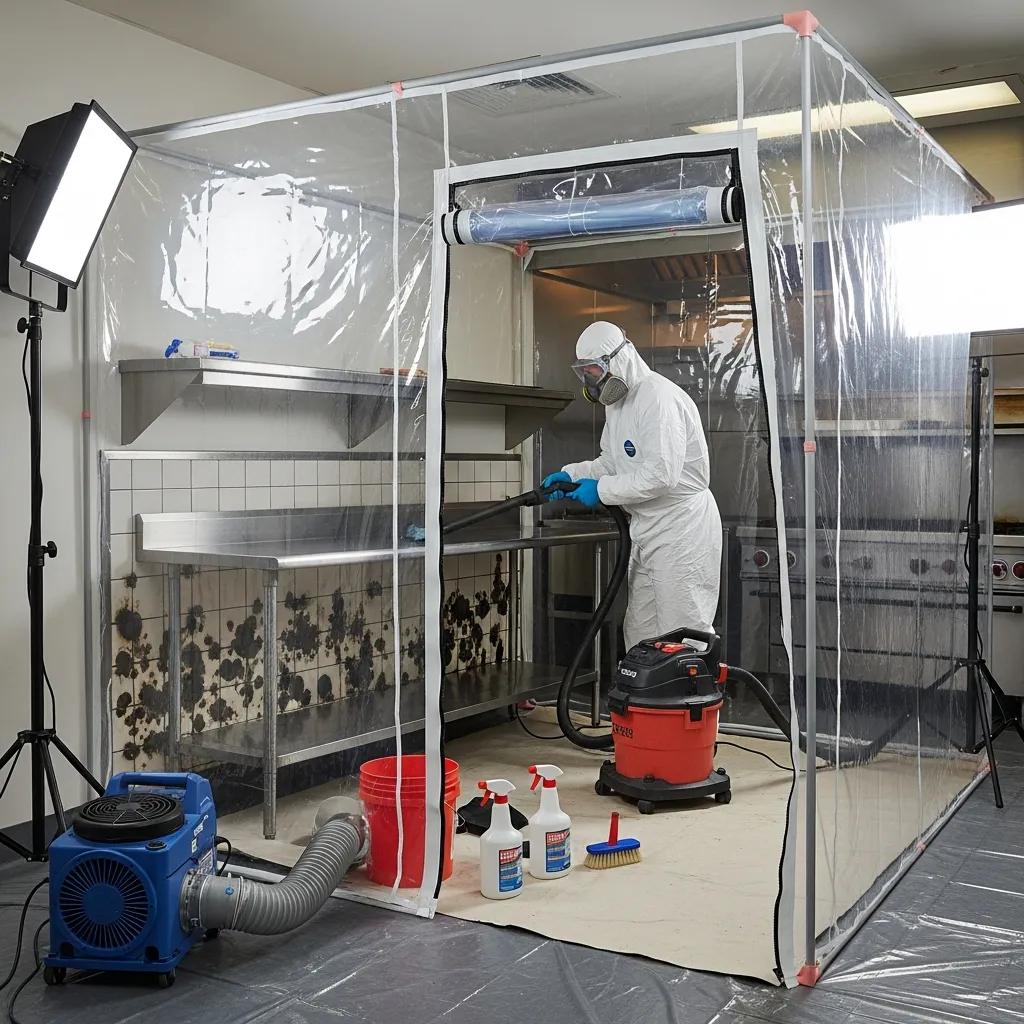
Best practices for restaurant mold remediation combine several steps. These include accurate assessment, containment, safe removal, and post-remediation verification. The goal is to restore healthy environments suitable for food preparation and storage.
The remediation process starts with an inspection. This identifies affected materials and moisture sources. Then, containment and negative air systems are used. These prevent mold spores from spreading to clean areas.
Proper removal of contaminated porous materials follows. Then, non-porous surfaces are thoroughly cleaned. Antimicrobial treatments are applied where needed. Finally, clearance testing confirms acceptable indoor air and surface conditions.
Prevention focuses on eliminating moisture pathways. It also involves maintaining HVAC performance. Routine monitoring and staff awareness are key.
Here are the key remediation steps, their typical outcomes, and estimated commercial cost ranges. This information helps restaurant owners plan effectively. It also helps set expectations with insurers and health authorities.
- Assessment & Testing: This step identifies the extent of the problem and how contaminated the area is. Costs typically range from $300–$1,200.
- Containment & Removal: This prevents mold from spreading and removes all contaminated materials. Costs can range from $1,000–$8,000 or more.
- Cleaning, Sanitization & Clearance Testing: This restores the area to a safe condition for food preparation. Costs are usually between $500–$3,000.
This list shows how assessment and containment influence later costs and results. Early detection and professional remediation typically lower the total expense. This is because they help avoid extensive demolition and reconstruction.
Identifying and Removing Black Mold in Commercial Kitchens
Black mold often appears as a visible, dark-staining growth. In kitchens, it most frequently shows up on drywall, ceiling tiles, and in hidden spaces where moisture has lingered. Its presence requires prompt professional evaluation.
Distinguishing surface staining from active mold growth needs a moisture assessment. Where appropriate, targeted sampling and lab testing help understand the mold species and risk. However, visible contamination in food zones should be addressed immediately.
Containment, safe removal of affected porous materials, and thorough cleaning of structural elements are crucial. These steps prevent cross-contamination to food prep areas and storage. After remediation, clearance testing and documentation provide evidence of a safe environment. This is important for health inspectors and operational stakeholders.
Preventative Measures to Avoid Mold Growth in Food Service Areas
Prevention focuses on keeping areas dry. This involves HVAC maintenance, prompt leak repairs, and moisture monitoring in high-risk zones. Examples include under sinks, behind refrigeration, and above ceiling tiles.
A practical prevention checklist includes several items. Schedule plumbing inspections and grease-trap maintenance. Replace HVAC filters. Conduct periodic infrared or moisture-meter scans. These detect hidden wetness before mold takes hold. Staff training is also important. It teaches early signs of leaks and immediate response actions. For example, isolating the area and moving perishables. This reduces the time window for microbial growth. Consistent monitoring and record-keeping create a reliable history. This supports insurance claims and health-department inquiries if incidents occur.
How Do Health Code Compliance and Insurance Claims Affect Restaurant Restoration?
Health code compliance and insurance claims significantly shape the restoration process. This applies after water damage or mold discovery. Understanding local food safety regulations is crucial for restaurant owners. Both regulators and insurers require documentation, verified remediation, and proof that food safety has been restored.
Health inspectors expect sanitized surfaces. They also require verified clearance testing and documentation of remediation activities. These are needed before approving a safe reopening. Insurance adjusters evaluate several factors. They look at the water event’s classification, the scope documented by professionals, and whether mitigation was timely. This helps them determine coverage.
Before reopening and during claims submission, operators should align remediation records with regulatory and insurance expectations. Here’s a breakdown:
- Health Department Requirements: They expect sanitized surfaces, verified clearance testing, and documented remediation. Action: Keep all remediation reports and clearance results.
- Insurance Documentation: Insurers look for photos, time-stamped logs, and professional estimates. Action: Provide detailed loss documentation and professional scope reports.
- Overall Recommended Action: Coordinate remediation with professional reports. Action: Always use certified technicians and keep thorough records for your claims.
This list highlights how regulatory and insurer needs often overlap. It shows why documentation and certified remediation reports are vital. They ensure compliant reopening and smooth claim handling.
Ensuring Health Department Standards After Water Damage and Mold Remediation
Health departments expect clear proof of sanitization for food-contact surfaces. They also require the removal or replacement of affected porous materials in preparation areas. Evidence that humidity and moisture sources are controlled is also necessary. All this must be in place before they authorize reopening.
Documentation usually includes detailed work orders. It also covers clearance testing results for air and surfaces. A narrative describing the steps taken to fix underlying causes is also important. Presenting an organized packet helps inspectors. This includes photos, technician reports, and moisture readings. It allows them to assess safety efficiently. It also reduces the risk of repeat inspections or extended closures. Proactive coordination with inspectors and transparent record-sharing speeds up reopening. It also protects patrons and staff.
Navigating Insurance Claims for Restaurant Water Damage Restoration
Successful insurance claims depend on timely documentation. This means immediate photographs and time-stamped logs of events. Itemized inventories of spoiled goods are also crucial. Professional mitigation reports that classify water type and scope are essential. Common mistakes include delayed mitigation, which increases secondary damage. Inadequate documentation and misclassifying water contamination are also pitfalls. Avoiding these errors means following industry protocols. It also means keeping professional reports from restoration providers. Certified restoration documentation includes moisture readings, drying logs, and clearance testing. This supports a strong claim narrative to adjusters. It also helps determine eligibility for business interruption coverage. Clear, organized evidence streamlines the claim. It also improves the likelihood of full restoration funding.
Why Choose IICRC-Certified Professionals for Your Restaurant Restoration Needs?
IICRC-certified restoration professionals follow industry standards. These cover water damage, structural drying, and mold remediation. For more information on these rigorous standards, visit the official IICRC website. They deliver consistent processes. These meet regulatory and insurance expectations in food-service settings. Certification programs like Water Restoration Technician (WRT) and Applied Structural Drying (ASD) train technicians. They learn how to assess moisture, choose drying equipment, and document results. These skills are especially relevant for commercial kitchens and storage areas. Certified teams use standardized methods for containment and sanitation. This reduces liability. It also supports clearer communication with health departments and adjusters. Choosing certified technicians increases confidence. You can trust that remediation will be effective, documented, and defensible.
Experienced restoration teams offer several key services. Providing rapid 24/7 response and specializing in food service. Offering comprehensive, end-to-end solutions. They employ certified professionals and assist with insurance claims. All these are valuable for restaurants needing quick recovery. These benefits reduce reopening risk. They improve claim outcomes. They also ensure remediation aligns with industry best practices.
Benefits of IICRC Certification in Water Damage and Mold Remediation Services
IICRC certification offers clear benefits. Technicians trained in drying science reduce drying times. Certified protocols minimize the risk of remaining contamination. Documentation that meets industry standards strengthens interactions with insurance and regulators. For restaurants, these benefits mean shorter downtime. They also lead to lower total restoration costs. They provide clearer ways to show safety to health inspectors. Certification also shows that technicians understand food-service-specific vulnerabilities. These include refrigeration baseboards and ceiling plenums near hoods. They know how to sequence work to protect food and equipment. Ultimately, certification supports continuous operations and builds trust with all stakeholders.
Specialized Equipment and Techniques Used by Certified Restoration Technicians
Certified restoration teams use specialized equipment. This includes industrial pumps, submersible and truck-mounted vacuums, and high-capacity air movers. They also use low-grain refrigerant (LGR) dehumidifiers, moisture meters, and thermal imaging cameras. These tools rapidly extract water and verify drying progress.
Equipment selection is tailored to restaurant materials. This includes tile, concrete, insulated refrigeration platforms, and commercial cabinetry. Drying is aggressive where needed. But it is controlled to prevent damage to finishes. Continuous monitoring and documented moisture readings guide decisions. They help determine when to begin repairs and sanitation. This ensures the space meets clearance criteria before service resumes. The combination of specialized tools and certified protocols reduces risk. It also speeds up safe reopening.
What Preventative Maintenance Tips Can Help Restaurants Avoid Water Damage and Mold?
A structured preventative maintenance program helps reduce water incidents. It identifies vulnerabilities. It also creates predictable inspection and response routines. For comprehensive guidance on maintaining commercial kitchens, refer to resources on mold prevention from the EPA. This keeps food-service operations resilient. Key elements include scheduled plumbing inspections and appliance maintenance. Grease-trap servicing and HVAC filter and coil maintenance are also important. Moisture monitoring in high-risk zones is crucial. Combining sensor-based leak detection with staff training helps. Clear action protocols shorten response times when leaks occur. This prevents minor issues from becoming business-interrupting events. Keeping records and a simple maintenance calendar also supports insurance discussions and regulatory preparedness.
Below is a practical maintenance checklist for commercial kitchens:
- Monthly inspections: Check dishwashers, ice machines, condensate lines, and under-sink connections for leaks.
- Quarterly HVAC and grease-trap service: Clean coils, replace filters, and confirm grease-trap function to avoid backups.
- Continuous monitoring: Install moisture sensors near floor drains, refrigeration, and under prep tables. Link alerts to your facility’s response protocols.
Regular Plumbing Inspections and Equipment Maintenance for Commercial Kitchens
A maintenance calendar helps keep critical systems working. It assigns monthly, quarterly, and annual tasks to trained staff or contractors. This reduces unexpected failures. Monthly checks should focus on high-risk items. These include flexible supply lines, hose connections, ice machine drains, and appliance seals. Quarterly tasks should include grease-trap inspection and HVAC coil cleaning. Annual tasks can cover roof drainage inspections and full plumbing system reviews. Recording inspections and corrective actions provides an operational audit trail. This supports insurance and regulatory inquiries. It also helps identify recurring issues that may need major repairs. Consistent maintenance reduces downtime risk. It also preserves the longevity of kitchen infrastructure.
Moisture Monitoring and Leak Detection Systems to Protect Food Service Areas
Leak detection systems provide early warning of moisture. These range from simple wireless sensors to integrated facility-management platforms. They detect water accumulation in vulnerable zones. Examples include under refrigeration, behind prep stations, and near floor drains. Sensor placement should prioritize low points and hidden spaces. These are where water can collect unseen. Alerting protocols must connect to staff response plans. This ensures alarms trigger immediate investigation and containment. Integrating sensors with monitoring logs and maintenance workflows creates continuous protection. It shortens the time between a leak starting and remediation. This limits the chance for mold growth. Early detection systems are a cost-effective defense. They reduce emergency restoration needs and help maintain safe service.
If you need immediate assistance, restoration specialists are available. Offering 24/7 emergency response and food-service specialization. They provide comprehensive, end-to-end solutions. All of their technicians are IICRC-certified and can also assist with insurance claims. All this supports rapid mitigation, documented remediation, and verified clearance. Their goal is to get your restaurant back to safe operation.
Frequently Asked Questions
What should I do immediately after discovering water damage in my restaurant?
Upon discovering water damage, the first step is to ensure safety by shutting off utilities in the affected area. Remove perishable items and isolate the damaged zone to prevent further contamination. Document the damage with photos and notes for insurance purposes. Then, contact a professional restoration service that specializes in commercial properties. Quick action is crucial to minimize damage and prevent mold growth, which can start within 24-48 hours in humid environments.
How can I prevent mold growth in my restaurant after water damage?
To prevent mold growth after water damage, ensure that the affected area is thoroughly dried within 24-72 hours. Use industrial dehumidifiers and air movers to expedite the drying process. Regularly inspect and maintain HVAC systems to control humidity levels. Implement a routine moisture monitoring program, especially in high-risk areas like kitchens and storage rooms. Training staff to recognize early signs of leaks and moisture can also help in taking prompt action to mitigate risks.
What are the signs of mold growth that restaurant owners should look for?
Restaurant owners should be vigilant for several signs of mold growth, including visible dark spots or stains on walls, ceilings, and floors, particularly in damp areas. A musty odor is often a strong indicator of mold presence. Additionally, check for water stains or discoloration on surfaces, especially near plumbing fixtures and appliances. If staff or customers experience unexplained respiratory issues, it may also signal mold problems that need immediate attention.
How does water damage affect my restaurant's insurance claims process?
Water damage can complicate the insurance claims process if not documented properly. Insurers typically require detailed records, including photographs of the damage, time-stamped logs of events, and professional assessments of the situation. It’s essential to classify the type of water involved and the extent of the damage accurately. Delays in mitigation or inadequate documentation can lead to reduced coverage or claim denials, so maintaining thorough records is crucial for a successful claim.
What are the long-term impacts of water damage on restaurant operations?
Long-term impacts of water damage on restaurant operations can include structural damage, persistent mold issues, and ongoing health risks for staff and customers. These factors can lead to costly repairs, increased insurance premiums, and potential health department citations. Additionally, prolonged closures for repairs can result in significant revenue loss. Establishing a robust preventative maintenance program can help mitigate these risks and ensure the restaurant remains operational and compliant with health standards.
How often should I conduct maintenance checks to prevent water damage?
Regular maintenance checks should be conducted monthly, quarterly, and annually to effectively prevent water damage. Monthly inspections should focus on high-risk areas such as dishwashers, ice machines, and under-sink connections. Quarterly checks should include HVAC and grease-trap servicing, while annual inspections can cover roof drainage and plumbing systems. Keeping a maintenance calendar and documenting inspections helps identify recurring issues and supports insurance discussions if incidents occur.
What role do certified restoration professionals play in the recovery process?
Certified restoration professionals play a critical role in the recovery process by ensuring that water damage and mold remediation are conducted according to industry standards. They utilize specialized equipment and techniques to assess damage, extract water, and dry affected areas efficiently. Their expertise helps minimize health risks and ensures compliance with health regulations. Additionally, they provide thorough documentation that supports insurance claims, making the recovery process smoother and more effective for restaurant owners.