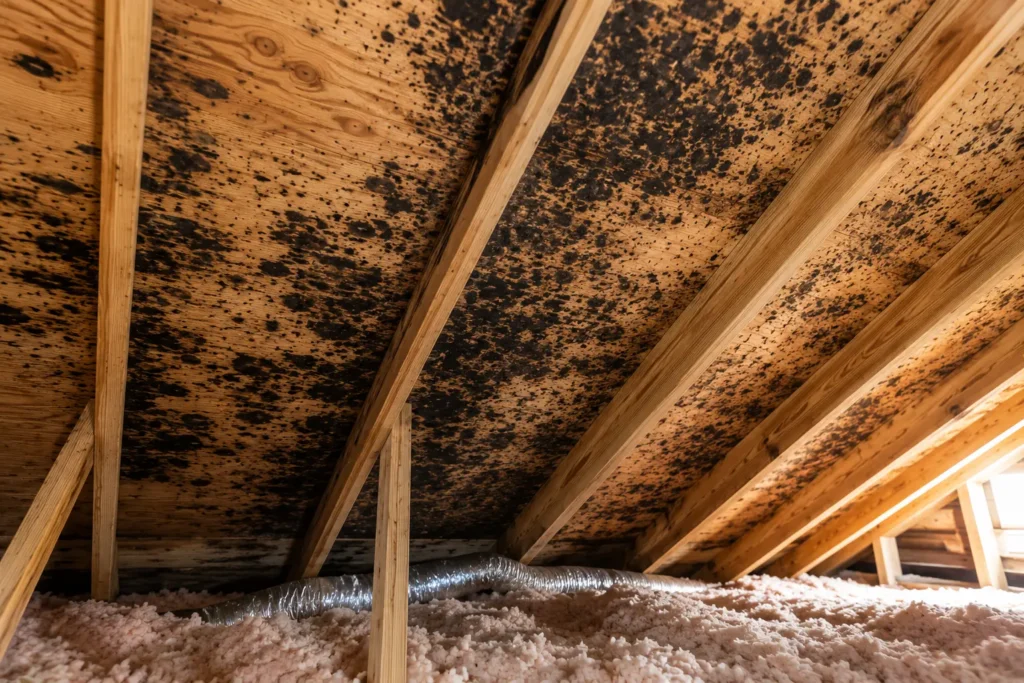
Attic mold removal shouldn’t wait — mold spreads fast because it goes unnoticed, hidden above the ceiling and exposed to temperature swings, until there’s a musty smell or a home sale on the line. Our certified team removes attic mold safely, treats the affected wood, and identifies what’s driving the moisture so you know exactly what’s next.
Finding mold in your attic is stressful, especially if you didn’t know it was there until a home inspection flagged it or you noticed a smell coming from upstairs. You’re wondering how long it’s been growing, what it means for your roof, and what it will take to fix. We inspect thoroughly and tell you exactly what we find, no surprises.
Our first priority is removing the mold safely and treating the roof deck and rafters it’s growing on. If the real issue is a roof leak or poor attic ventilation, we’ll identify that clearly so you know what’s driving the problem, even though the repair itself may need a roofer or HVAC specialist.
We examine the full attic structure, not just the visible mold, to understand how far it's spread.
We identify whether a roof leak, poor ventilation, or an improperly vented exhaust fan is feeding the mold.
Attic mold severity varies widely. Some cases are limited to insulation and surface areas; others have spread into the roof deck and rafters themselves. We assess which applies to your attic before recommending a plan.
For mold isolated to insulation, we safely remove and dispose of contaminated material and treat the surrounding area.
For mold that's penetrated the wood structure, we treat rafters and decking with antimicrobial solutions to stop further spread.
Every job includes identifying the root moisture cause. If a roof repair or ventilation fix is needed, we'll tell you clearly and can refer you to a trusted local partner.
A persistent musty smell on the top floor, visible dark or discolored patches on the underside of the roof deck, and mold flagged during a home inspection are the most common ways attic mold gets discovered.
Attic mold is almost always caused by a roof leak, poor ventilation (soffit or ridge vents), or a bathroom exhaust fan venting into the attic instead of outside, all of which trap moisture against the roof deck.
No — we specialize in mold removal and structural wood treatment. If your attic mold is being caused by a roof leak or ventilation issue, we’ll identify that clearly during inspection and can refer you to a trusted local roofer or HVAC specialist..
Yes, and it’s one of the most common reasons real estate deals stall or get renegotiated. Addressing attic mold proactively, with documentation, helps avoid last-minute issues during a sale.
Costs depend on the square footage affected and whether the mold has reached the roof deck structure or is limited to insulation. We provide an on-site inspection and written estimate before any work begins.
Often, yes, if the mold resulted from a covered peril like a sudden roof leak. Mold from long-term ventilation issues is typically not covered. We can help document the cause and work with your insurance provider.
Replacing insulation alone won’t solve the problem if mold has colonized the roof decking or rafters underneath. The wood structure needs to be treated first, or the mold will spread to new insulation too.
Most attic mold jobs are completed in a single day. Larger jobs involving extensive insulation removal or roof deck treatment may take 1–2 days.
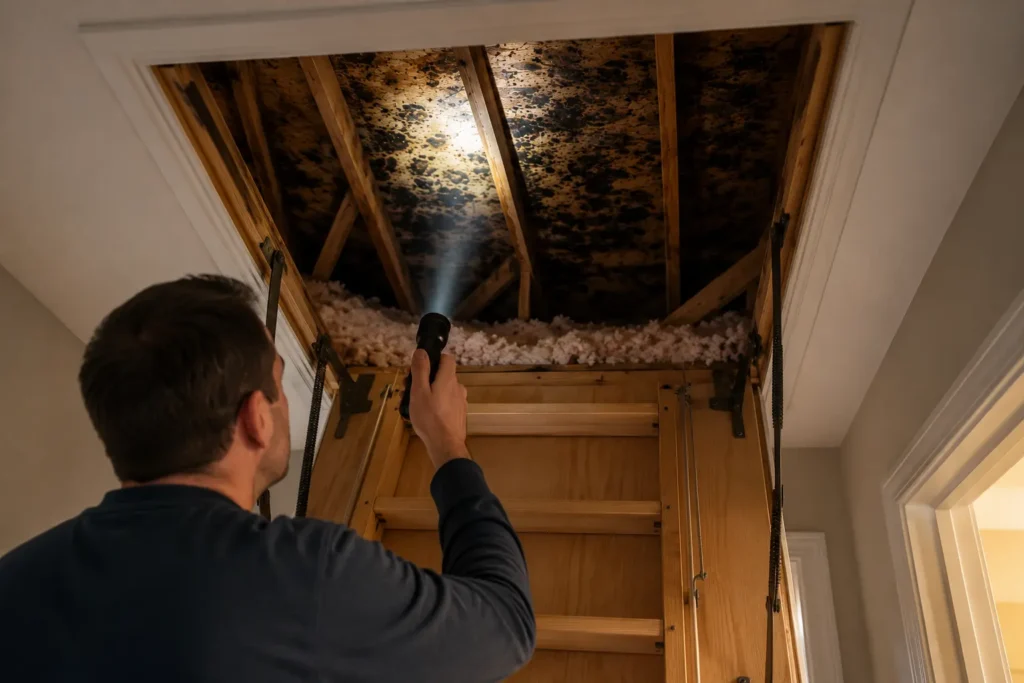
After any roof leak or ventilation issue introduces moisture into your attic, mold can begin colonizing exposed wood within 24 to 48 hours. Left untreated, it spreads across the roof deck and into insulation, often going unnoticed until it’s affecting air quality on the floor below.
Our mold remediation team responds quickly to assess the extent of growth, contain the area, and begin treatment. If your attic mold started with water damage, our water damage restoration team can also address any related damage in the same visit. If your mold problem is below the roofline instead, see our basement mold removal or crawl space mold removal services.
We provide professional water extraction services throughout Middle Tennessee, including Nashville, Murfreesboro, and surrounding communities.
The longer mold sits in your attic, the more of the roof structure it can affect, and the more likely it is to surface as a problem during a home sale. Call now for a free inspection, and we’ll tell you exactly what your attic needs
Fast Response • Certified Mold Remediation • Insurance Assistance • Serving Middle Tennessee
Attic mold is easy to underestimate because it's out of sight and rarely inspected. Left untreated, it spreads across the roof deck, compromises insulation, and can affect indoor air quality throughout the home as air circulates between floors. According to the EPA, mold exposure can trigger allergic reactions and respiratory issues in sensitive individuals, which is why proper containment during removal matters as much as the removal itself.
24 Hour Flood Fighters uses IICRC S520 protocols to assess the full extent of attic mold before treatment begins, ensuring nothing is missed in hard-to-reach areas near soffits, ridge vents, or behind insulation.
Attics experience extreme temperature swings, and condensation can build quickly on the underside of the roof deck when ventilation is inadequate. Combined with even a small roof leak, mold can begin colonizing exposed wood within 24 to 48 hours.Because attics are rarely inspected, this growth often goes unnoticed until a musty smell reaches the living space below or a home inspection flags it directly..
Not all attic mold is the same. Surface mold on insulation can typically be removed without major structural concern. However, prolonged moisture exposure can affect the roof deck and rafters themselves, requiring more extensive structural wood treatment.Our inspection process distinguishes between the two, so you understand exactly what your attic needs before any work begins.
Removing existing mold solves today's problem, but it doesn't address what caused it. That's why every inspection includes identifying whether a roof leak, ventilation issue, or improperly vented exhaust fan is driving the moisture.We're upfront about the scope of what we do: mold removal and structural wood treatment. If your attic needs a roof repair or ventilation fix, we'll tell you clearly and can point you to a trusted local partner for that work.