Black mold removal requires more than a quick clean-up — Stachybotrys and other toxic mold species call for strict containment, full PPE, and certified disposal protocols to protect your health and your home. Our IICRC-certified team follows the S520 standard for safe, thorough black mold removal, with air quality testing to confirm the job is done right.
Finding what looks like black mold in your home is genuinely alarming, and for good reason. Unlike common surface mold, Stachybotrys and similar species produce mycotoxins linked to respiratory issues, chronic coughing, headaches, and fatigue, especially for children, older adults, or anyone with existing respiratory conditions. You deserve a straight answer about what you’re dealing with, not guesswork.
Our first step is always testing to confirm what species you’re dealing with and how far it’s spread. From there, we follow strict containment protocols before any removal begins, so spores don’t spread to unaffected areas of your home while we work.
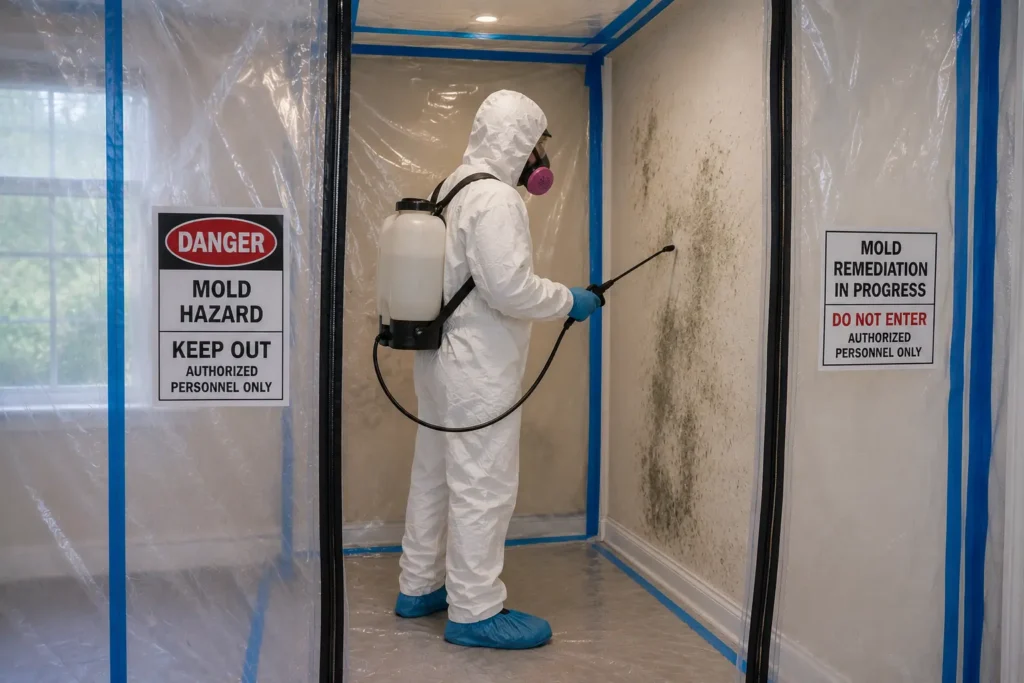
We sample and test to confirm species and contamination extent before recommending a remediation plan.
Negative air pressure and sealed barriers isolate the work area, protecting the rest of your home during removal.
Black mold severity varies by how far it’s spread and what’s feeding it. We assess the full scope before recommending a plan, so your containment and removal approach matches the actual size of the problem.
For mold isolated to one room or surface, we set up localized containment, remove contaminated material, and treat the area.
For mold that's spread through HVAC systems or multiple rooms, we scale containment and negative air pressure across the full affected area.
The term “black mold” most commonly refers to Stachybotrys chartarum, but mold color alone doesn’t determine how hazardous it is. Many types of mold—including black, green, white, and brown varieties—can affect indoor air quality and trigger allergic reactions or respiratory symptoms. Because mold cannot be accurately identified by appearance alone, professional testing is often recommended when the species or extent of contamination is unknown.
You can’t reliably identify mold species by appearance alone. Many common molds are dark in color, including Cladosporium and Aspergillus species. If identifying the mold type is important, professional laboratory testing can determine the species and help guide the appropriate remediation plan.
It depends on the size and location of the affected area, as well as your health and comfort level. Small, properly contained remediation projects often allow homeowners to remain in the home. For larger projects—or if occupants have asthma, allergies, compromised immune systems, or other respiratory concerns—we may recommend temporarily staying elsewhere. We’ll discuss the best option after evaluating your property.
DIY mold test kits can detect the presence of mold spores, but they often can’t accurately determine the mold species or the full extent of contamination hidden behind walls, under flooring, or inside HVAC systems. A professional inspection provides a more complete assessment and, when appropriate, laboratory testing for accurate identification.
Small areas of surface mold on non-porous materials may sometimes be cleaned by a homeowner, but larger infestations or mold growing on drywall, wood, insulation, or other porous materials should be professionally remediated. Bleach and household cleaners often don’t penetrate porous materials deeply enough to eliminate mold at its source and may leave hidden growth behind.
Professional mold remediation focuses on safely removing contaminated materials, containing airborne spores, and addressing the underlying moisture problem to help prevent mold from returning..
Yes. We provide detailed documentation of the damage, photographs, moisture readings, and remediation records. When testing is performed, laboratory reports and post-remediation clearance documentation can also be provided to support your insurance claim.
Most residential mold remediation projects are completed within 1–3 days, while larger or more complex jobs involving multiple rooms, extensive structural damage, or HVAC contamination may take 3–7 days or longer. After inspecting the property, we’ll provide a timeline based on the scope of work.
Insurance coverage depends on what caused the mold. If it resulted from a covered sudden and accidental event, such as a burst pipe or storm-related water damage, remediation may be covered. Mold caused by long-term leaks, ongoing moisture issues, or deferred maintenance is often excluded. We’ll provide the documentation needed to help support your claim, and we can work directly with your insurance adjuster when applicable.
Properly installed containment is designed to prevent that from happening. We create a sealed containment area using heavy-duty polyethylene sheeting, tape, and zipper access doors, then place the area under negative air pressure with HEPA-filtered air scrubbers. This keeps airborne mold spores contained and continuously pulls air into the work area rather than allowing contaminants to escape. If we discover that mold extends beyond the original work area, we expand the containment before continuing remediation to ensure the rest of your home remains protected.
Professional mold remediation removes existing mold growth, but preventing it from returning depends on eliminating the underlying moisture problem. We identify the source of moisture, remove contaminated materials when necessary, and recommend steps to keep your home dry so mold is less likely to return.
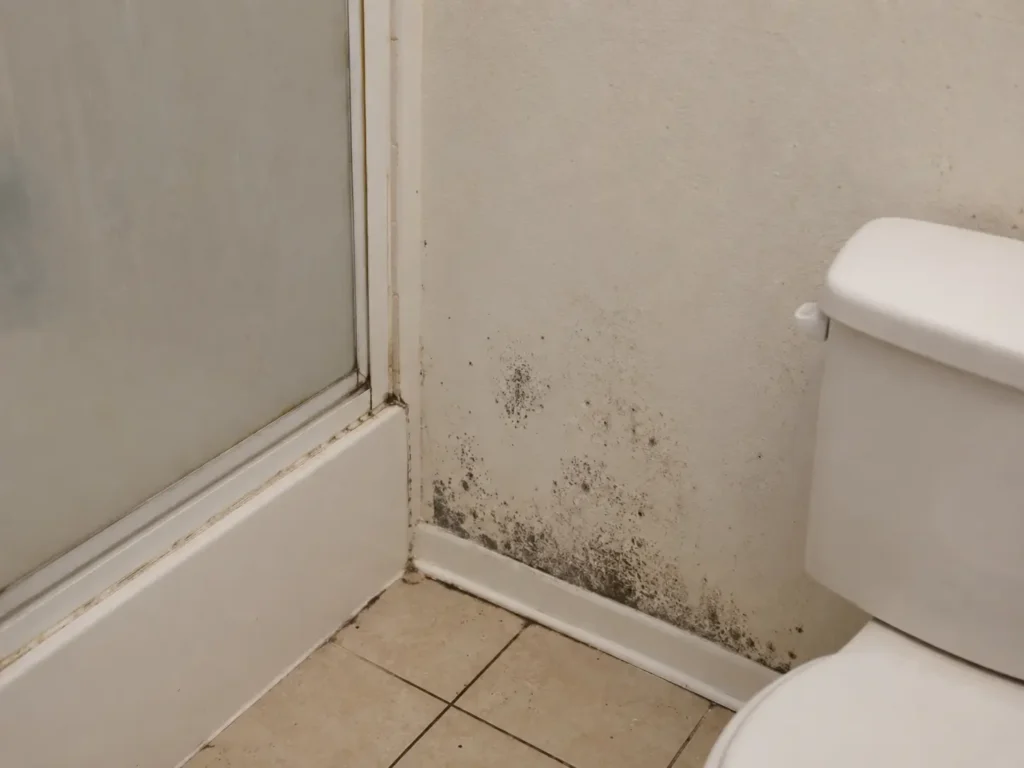
Black mold typically follows water damage that wasn’t fully dried within 24 to 48 hours, whether from a slow plumbing leak, a basement flood, or storm-related moisture. Once established, it can continue spreading as long as the moisture source remains, making fast professional response critical.
Our mold remediation team responds quickly to test, contain, and begin removal, often within the same visit as your inspection. If your black mold started with a water event, our water damage restoration team can also address that damage directly. For mold in specific areas of your home, see our basement and crawl space mold removal services.
We provide professional water extraction services throughout Middle Tennessee, including Nashville, Murfreesboro, and surrounding communities.
Black mold doesn’t get better on its own, and disturbing it yourself can make air quality worse. Call now for a free inspection and professional testing, and we’ll tell you exactly what you’re dealing with and what it will take to fix it.
Fast Response • Certified Mold Remediation • Insurance Assistance • Serving Middle Tennessee
Black mold is not a DIY project. Because Stachybotrys and related species produce mycotoxins linked to respiratory and health issues, disturbing contaminated material without proper containment can spread spores throughout a home rather than eliminate them. According to the EPA, mold exposure can trigger allergic reactions and respiratory issues, particularly in sensitive individuals, which is why containment matters as much as removal itself.
24 Hour Flood Fighters follows IICRC S520 protocols for every black mold job, using full PPE, negative air pressure, and sealed containment to protect both our technicians and your home during remediation.
Not all mold found in a home is equally concerning. Common surface molds are often a nuisance requiring straightforward cleaning, while species like Stachybotrys require lab or field testing to confirm and warrant stricter safety protocols due to their mycotoxin production. Visual color alone isn't a reliable way to identify black mold, since several harmless mold species also appear dark. That's why testing is the first step in any suspected black mold case, not an optional add-on.
Whether the mold is black or another species, preventing spores from spreading is a critical part of professional remediation. During black mold removal, we establish a sealed containment area using heavy-duty polyethylene barriers and, when appropriate, maintain negative air pressure with HEPA-filtered air scrubbers. Our technicians wear the proper PPE and follow industry best practices to safely remove contaminated materials while helping protect the rest of your home.Attempting to remove mold without proper containment can release microscopic spores into the air, allowing contamination to spread beyond the original affected area. Professional remediation is designed to address the source of the problem while minimizing the risk of cross-contamination.
Removing visible mold isn't the final step. After remediation, we conduct post-remediation air quality testing to confirm spore counts have returned to normal levels before we consider a black mold job complete. This documented clearance gives homeowners, buyers, and insurance providers confidence that the contamination has been fully addressed, not just visually cleaned.